Copper-based materials are widely used in electrical, industrial, and architectural applications. Among them, red copper and brass are two of the most commonly used materials, yet they are often mistaken for one another due to their similar appearance. Understanding the differences between red copper and brass is essential for selecting the right material for your project.
What is Red Copper?
Red copper, also known as pure copper, is a metal with a copper content typically above 99.5%–99.9%. It is one of the oldest metals used by humans and is valued for its excellent electrical and thermal conductivity, as well as its ductility. [1] In industrial contexts, it is often referred to by grades like T1, T2, or T3. While it is very pure, it often contains trace amounts of oxygen, which is why it is sometimes distinguished from oxygen-free copper.
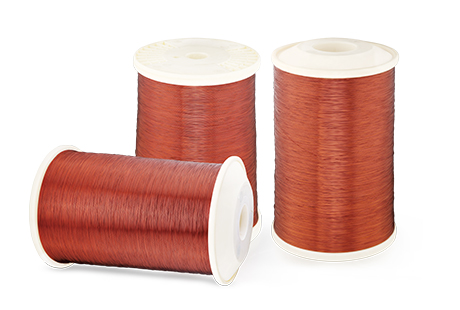
Its distinctive reddish color comes from its high purity and unique atomic structure. Red copper is soft, malleable, and easy to process, making it ideal for applications that require flexibility and conductivity:
What is Brass?
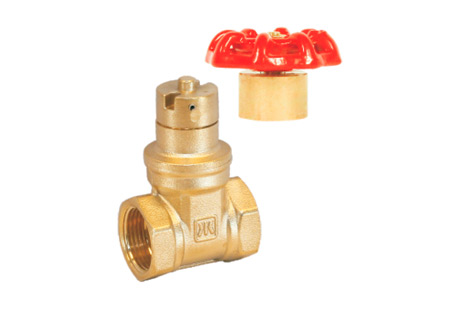
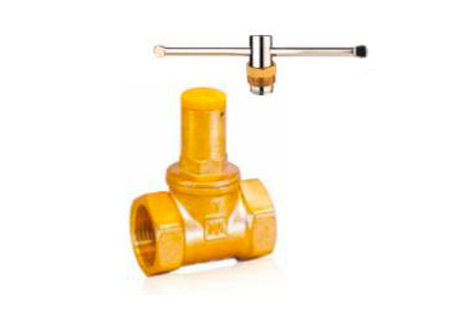
Brass is an alloy made primarily of copper and zinc, with copper content usually ranging from 60% to 90%, depending on the grade. The addition of zinc significantly changes the properties of copper, improving strength, hardness and wear resistance. Brass typically has a yellow or golden appearance, which makes it popular for decorative and mechanical applications:
Valves and pipe fittings
Musical instruments
Decorative hardware
Precision components
Mechanical parts
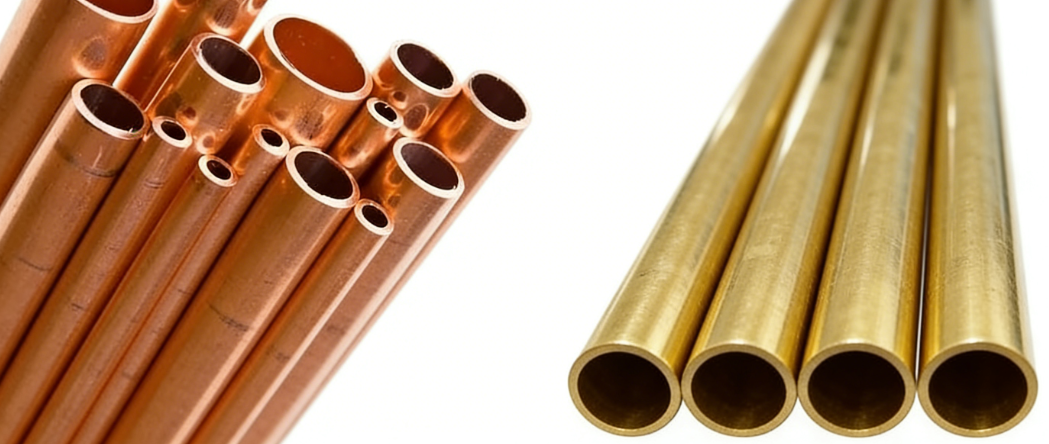
Red Copper vs Brass
1. Composition
The most fundamental difference lies in their composition:
This difference directly affects their conductivity, strength, and applications.
2. Color and Appearance
The presence of zinc in brass changes the color significantly, making it visually distinguishable.
3. Electrical Conductivity
Red copper is one of the best electrical conductors among metals and is often used as the benchmark for conductivity (100% IACS). [2] Brass, however, has much lower conductivity, typically 15% to 35% of copper, due to the addition of zinc, which disrupts electron flow. [3] This is why red copper material is used in electrical wiring and brass is rarely used as a primary conductor.
4. Mechanical Strength
Brass is significantly stronger and harder than red copper because of its alloy structure.
This makes brass more suitable for structural and mechanical components.
5. Ductility and Workability
Red copper has excellent ductility, meaning it can be easily bent, stretched, or drawn into wires without breaking. Brass, while still workable, is less ductile but easier to machine, making it ideal for precision components and fittings.
6. Corrosion Resistance
Both materials offer good corrosion resistance, but they behave differently:
Red copper forms a natural protective patina (green layer) over time
Brass provides strong resistance to wear and corrosion, especially in mechanical environments
| Property | Red Copper | Brass |
| Composition | ≥99.5% Copper | Copper + Zinc |
| Color | Reddish-brown | Yellow / Gold |
| Electrical Conductivity | ~100% IACS | 15–35% of copper |
| Strength | Moderate | High |
| Ductility | Very high | Moderate |
| Machinability | Moderate | Excellent |
| Corrosion Resistance | High (forms patina) | High |
| Typical Uses | Electrical, wiring | Fittings, valves, decorative |
How to Choose Between Red Copper and Brass?
Choose Red Copper if:
Electrical conductivity is critical
Flexibility and ductility are required
You are working with wires or electrical systems
Choose Brass if:
Strength and durability are more important
The component requires machining
A decorative appearance is needed
Although red copper and brass may look similar, they differ significantly in composition, conductivity, strength, and applications. Red copper, being a nearly pure metal, offers unmatched electrical performance and flexibility, making it ideal for electrical and thermal applications. Brass, on the other hand, provides enhanced strength and durability due to its alloy composition, making it suitable for mechanical and decorative uses.
Understanding these differences ensures you select the right material for your project, improving performance, cost-effectiveness, and reliability.
Contact Jintian:
If you are searching for reliable copper materials, Jintian Copper is a trusted manufacturer offering a wide range of high-quality copper products, including red copper wire, copper busbar, copper rods and tubes. With advanced production technology and strict quality control, Jintian ensures consistent performance and excellent conductivity for industrial and electrical applications. For technical support or customized solutions, contact the Jintian team today.
FAQs about Red Copper and Brass
1. Is red cooper pure copper?
Yes, red copper is essentially pure copper with a purity level typically above 99.5%, making it one of the best conductive materials available.
2. Why is red copper more conductive than brass?
Because red copper is a pure metal, electrons can flow more freely. In brass, the addition of zinc disrupts electron movement, reducing conductivity.
3. Which is stronger, brass or red copper?
Brass is stronger and harder due to its alloy composition, while copper red is softer and more flexible.
4. Can brass replace red copper in electrical applications?
Generally no. Brass has significantly lower conductivity and is not suitable for most electrical wiring applications.
5. How can you visually distinguish red copper from brass?
Red copper has a reddish-brown color, while brass appears yellow or golden due to the presence of zinc.
Reference:
[1] https://cufintube.com/types-of-copper-and-the-differences-between-red-copper-and-brass/
[2] https://www.interstatemetal.com/blog/copper-vs-brass-deciphering-differences/
[3] https://www.customproc.com/copper-vs-brass-conductivity-guide/

 English
 한국어
한국어 français
 Deutsch
 Español
 italiano
 العربية
 tiếng việt
 Türkçe
 ไทย
ไทย 中文
中文